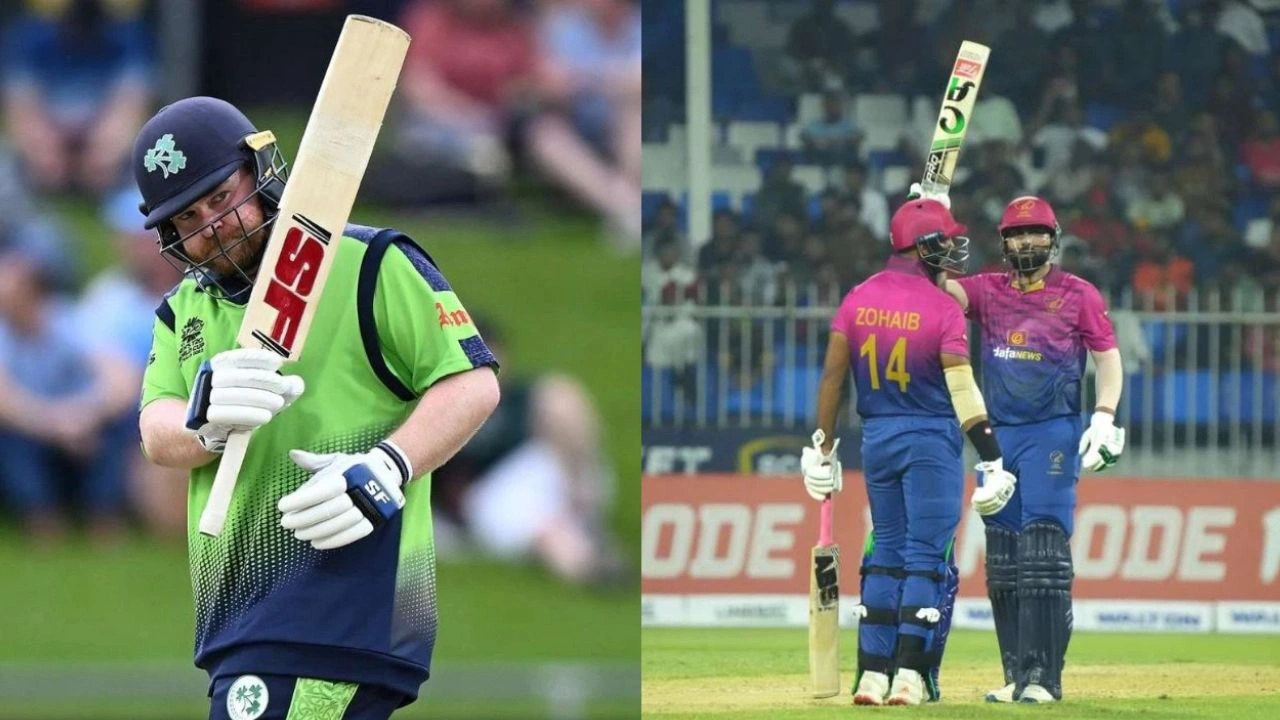
Ireland vs UAE: Ireland began their 2026 tour of the United Arab Emirates in emphatic fashion, delivering a comprehensive 57-run victory over the hosts in the first T20 International at the Dubai International Cricket Stadium. In a match defined by tactical clarity, batting depth, and disciplined bowling, Ireland asserted their superiority across all three departments to take a 1–0 lead in the two-match series.
The contest, played under lights in Dubai, was more than just a routine bilateral fixture. With the ICC Men’s T20 World Cup 2026 on the horizon, both teams viewed the encounter as a critical opportunity to test combinations, evaluate bench strength, and build competitive rhythm. While the UAE showed flashes of promise, Ireland’s experience, balance, and execution ultimately proved decisive.
A Night of High Stakes and Strategic Importance
The opening T20I carried considerable significance for both sides. Ireland arrived in the UAE seeking momentum and cohesion, keen to fine-tune a squad that has grown steadily more competitive on the global stage. Their recent performances suggested a team capable of challenging higher-ranked opponents, provided consistency followed intent.
For the UAE, the match represented an opportunity to showcase their growth as an associate nation, especially on home soil. Facing a full-strength Ireland side, the hosts aimed to test themselves against quality opposition and demonstrate that they could compete at the highest level of the shortest format.
The Dubai International Cricket Stadium provided ideal conditions for a competitive contest. The surface offered true bounce, while the outfield was quick, rewarding well-timed shots. With minimal dew expected later in the evening, captains were likely to favor batting first and putting scoreboard pressure on the chasing side.
Read Also: Titans Set to Hire Robert Saleh as Head Coach: What the Move Means for Tennessee’s Rebuild
Ireland Win the Toss and Set the Tone
Ireland captain Paul Stirling wasted little time after winning the toss, electing to bat first. The decision reflected confidence in Ireland’s batting depth and an understanding of Dubai’s conditions, where chasing large totals under lights can become increasingly difficult.
Ireland’s approach from the outset was clear: attack with intent, but avoid recklessness. Rather than relying on one or two standout innings, they focused on building partnerships and maintaining a healthy run rate throughout the 20 overs.
Ireland’s Innings: Collective Batting Builds a Strong Total
Ireland’s batting effort was defined not by a single dominant knock, but by consistent contributions throughout the lineup. The top order laid a stable foundation, the middle order consolidated momentum, and the lower middle order provided the late surge required to push the total beyond UAE’s comfort zone.
Steady Start Without Overexposure
Ireland’s openers approached the powerplay with measured aggression. Rather than going all out against the new ball, they prioritized shot selection and strike rotation, ensuring wickets were preserved while the score ticked along steadily.
Although the opening partnership did not explode in the early overs, it succeeded in establishing rhythm and preventing UAE from gaining early control.
Ross Adair Anchors the Middle Overs
The backbone of Ireland’s innings came from Ross Adair, who top-scored with a fluent 39 off 29 balls. His knock was a masterclass in T20 batting awareness—finding gaps, punishing loose deliveries, and keeping the scoreboard moving without unnecessary risk.
Adair’s innings was particularly valuable during the middle overs, a phase where teams often lose momentum. By rotating the strike effectively and picking boundary options wisely, he ensured Ireland maintained pressure on the bowling side.
Lorcan Tucker Adds Intent and Tempo
Wicketkeeper-batter Lorcan Tucker complemented Adair perfectly with a brisk 38 off 25 deliveries. Tucker’s ability to accelerate without disrupting the innings flow allowed Ireland to transition smoothly from consolidation to aggression.
His confident strokeplay against both pace and spin forced UAE’s bowlers to adjust their lines repeatedly, creating opportunities for Ireland to exploit.
Middle-Order Stability Through Curtis Campher
Curtis Campher played an understated yet vital role, contributing 25 runs from 23 balls. While his strike rate may not have drawn headlines, his presence ensured Ireland avoided the kind of middle-order collapse that often plagues teams aiming for big totals.
Campher’s composure allowed Ireland’s more aggressive batters to play freely around him, reinforcing the team’s collective approach.
Late Flourish from Benjamin Calitz
As the innings entered its final phase, Benjamin Calitz provided the finishing touch with an unbeaten 26 off just 12 balls. His clean hitting in the closing overs transformed a competitive score into a formidable one.
By targeting the shorter boundaries and capitalizing on tired bowlers, Calitz ensured Ireland crossed the 175-run mark—a psychological threshold that significantly increased pressure on the hosts.
Ireland Finish on 178/6
At the end of 20 overs, Ireland posted 178 for 6, a total built on balance, awareness, and intelligent shot selection. While not overwhelming on paper, the score was always going to be challenging given Ireland’s disciplined bowling attack.
UAE’s Bowling: Moments of Promise, But Lacking Control
The UAE bowling unit showed moments of effectiveness, particularly in breaking partnerships, but struggled to sustain pressure consistently.
Haider Ali emerged as the standout performer, claiming two wickets for 31 runs. His ability to vary pace and extract movement disrupted Ireland’s rhythm at key moments.
Junaid Siddique also chipped in with two wickets, displaying good control during the middle overs. Meanwhile, Muhammad Arfan delivered an economical spell, keeping things tight when the game threatened to slip away.
However, UAE’s bowlers were unable to contain Ireland’s scoring during the death overs—a phase that ultimately proved decisive.
UAE’s Chase: A Steep Climb from the Start
Chasing 179, the UAE needed a strong powerplay to keep pace with the required run rate. While there was early intent, Ireland’s bowlers quickly tightened the screws, forcing the hosts into difficult decisions.
Muhammad Waseem Leads the Resistance
Captain Muhammad Waseem was the standout performer for UAE, scoring 40 off 37 balls. His innings displayed determination and leadership, as he attempted to anchor the chase while maintaining scoring momentum.
However, Waseem lacked consistent support from the other end, a recurring issue that prevented UAE from mounting a serious challenge.
Aryansh Sharma Brings Brief Momentum
Wicketkeeper Aryansh Sharma provided a short burst of energy with 23 off 17 balls, briefly raising hopes of a recovery. His aggressive approach injected urgency into the chase, but the partnership failed to flourish into something substantial.
Frequent Wickets Stall the Chase
Ireland’s bowlers struck at regular intervals, preventing UAE from building meaningful partnerships. Each time a batter threatened to settle, a breakthrough followed, keeping the required run rate climbing steadily.
As pressure mounted, UAE’s batters were forced into riskier shots, leading to a steady procession of wickets.
UAE Bowled Out for 121
Ultimately, UAE were dismissed for 121 in 19.5 overs, falling well short of the target. The margin of defeat reflected not a lack of effort, but a difference in execution and depth between the two sides.
Ireland’s Bowling: Discipline and Ruthlessness
Ireland’s bowling performance was the defining factor of the match. The attack combined accuracy, variation, and intelligent field placements to suffocate the UAE batting lineup.
Gareth Delany: Player of the Match
Gareth Delany delivered a standout performance, claiming three crucial wickets and earning the Player of the Match award. His ability to break partnerships and apply pressure during the middle overs was instrumental in Ireland’s dominance.
Delany’s variations in flight and pace repeatedly deceived UAE batters, forcing errors at critical moments.
Matthew Humphreys Adds Spin Control
Matthew Humphreys matched Delany’s impact with three wickets of his own, showcasing control and composure beyond his years. His spell ensured UAE never found momentum during the chase.
Together, Delany and Humphreys formed a spin partnership that dictated terms and exposed UAE’s vulnerability against disciplined bowling.
Seamers Maintain the Pressure
Ireland’s pace bowlers complemented the spinners perfectly, maintaining tight lines and preventing boundary flow. Their collective effort ensured UAE’s scoring options remained limited throughout the innings.
Tactical Brilliance and Key Turning Points
Several tactical decisions shaped the outcome of the match:
- Ireland’s choice to bat first allowed them to exploit favorable conditions and set a challenging target.
- Smart rotation of bowlers ensured constant pressure on UAE batters.
- Fielding discipline backed up the bowling plans, cutting off singles and forcing risky shots.
Ireland’s ability to adapt quickly to game situations highlighted their growing maturity as a T20 side.
What This Result Means for the Series
With this victory, Ireland took a 1–0 lead in the two-match series, placing them in a commanding position ahead of the second T20I.
For Ireland, the win reinforces confidence in their squad depth and strategic clarity. The balanced contributions suggest a team well-prepared for the challenges of international T20 cricket.
For UAE, the match serves as a learning experience. While there were encouraging signs, particularly from Waseem and the bowling unit, the hosts will need improved batting partnerships and greater composure under pressure to level the series.
Read Also: Benfica Shock Real Madrid as Mourinho Forces Champions League Playoff
Broader Context: Preparation for the Global Stage
This series forms part of a broader preparation phase for the ICC Men’s T20 World Cup 2026. Matches like these offer invaluable insights into team dynamics, adaptability, and mental resilience.
Ireland’s performance indicates a side capable of competing beyond the associate level, while UAE’s participation highlights the growing competitiveness and ambition of emerging cricket nations.
Conclusion
The first T20I between Ireland and the United Arab Emirates was a comprehensive demonstration of structured T20 cricket. Ireland’s blend of smart batting, disciplined bowling, and tactical awareness delivered a performance that left little doubt about the outcome.
While UAE showed heart and flashes of quality, Ireland’s consistency and depth proved decisive. As the series progresses, both teams will look to build on this match—Ireland aiming to seal the series, and UAE seeking redemption and improvement.
For cricket fans, the contest served as a reminder that T20 cricket rewards planning, execution, and teamwork as much as flair. The stage is now set for an intriguing second encounter, where lessons learned could shape a very different narrative.