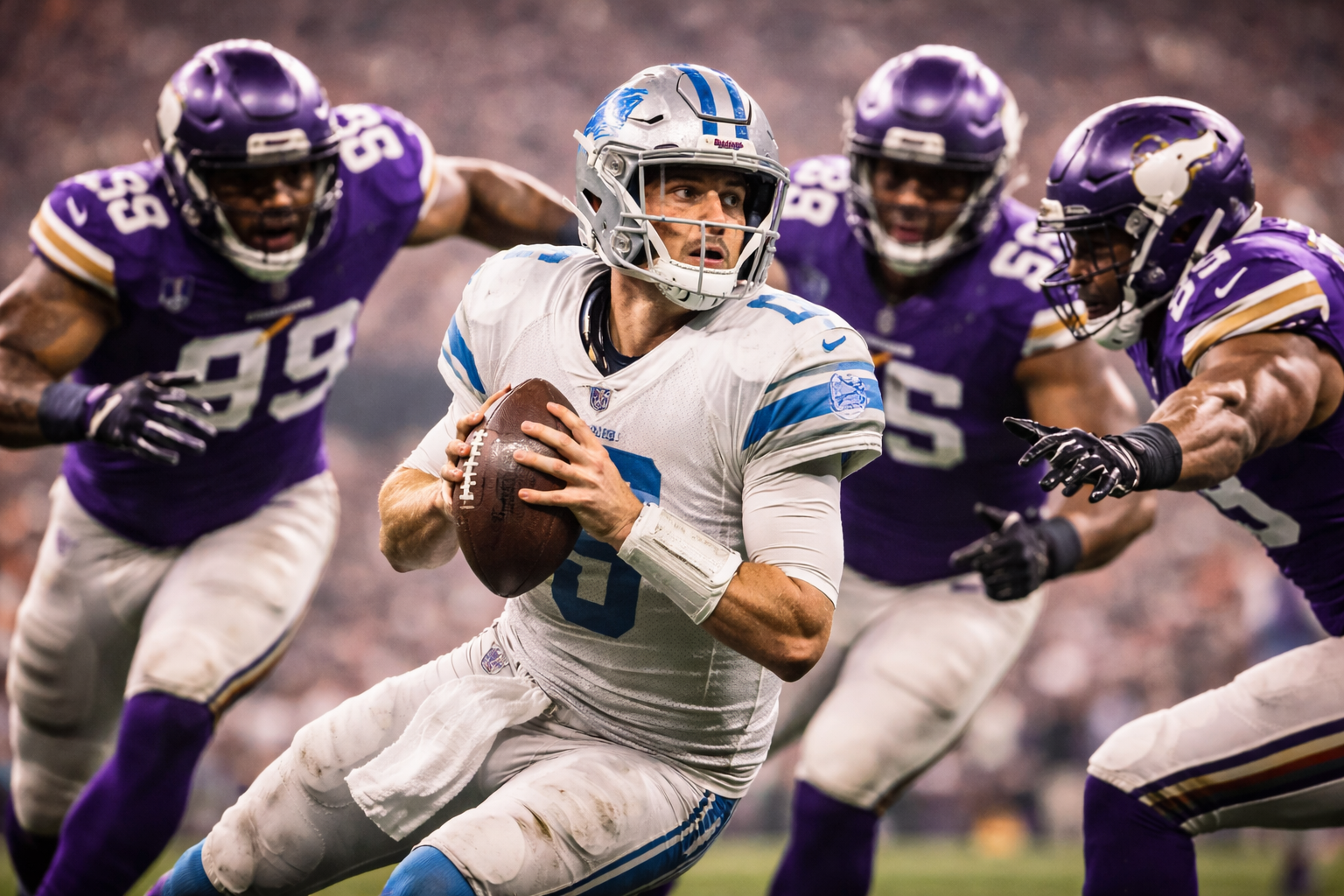
Vikings dominate Lions defense: In an NFL era built on explosive passing offenses, the Minnesota Vikings delivered one of the most unconventional victories of the season. Against the Detroit Lions, Minnesota proved that football fundamentals — defense, discipline, and situational execution — can still overpower even the most modern strategies.
Despite recording one of the lowest passing outputs in recent NFL history, the Vikings controlled the game from start to finish, exposing Detroit’s offensive struggles and reminding the league that dominance doesn’t always come through the air.
This was not just a win — it was a statement.
A Result That Defied Modern NFL Logic
NFL fans are accustomed to quarterbacks throwing for 250–300 yards as a baseline for victory. Minnesota tore that script apart.
The Vikings finished the game with virtually no passing production, yet walked away with a convincing win. Only a handful of teams in the past four decades have managed to win under similar conditions, making this performance historically rare.
What made it possible was a near-perfect defensive game plan, complemented by timely special teams execution and a commitment to mistake-free football.
Read Also:A Childhood Dream Comes True: Michael Neser’s Defining Boxing Day at the MCG
Game Overview: Vikings vs Lions
| Category | Minnesota Vikings | Detroit Lions |
| Final Score | 23 | 10 |
| Net Passing Yards | Extremely Limited | Inefficient |
| Turnovers Forced | Multiple | Costly |
| Defensive Pressure | Relentless | Inconsistent |
| Game Control | High | Low |
Minnesota never allowed the Lions to establish rhythm, momentum, or confidence.
Defense as the Cornerstone of Victory-Vikings dominate Lions defense
Relentless Pressure Up Front
From the opening drive, Minnesota’s defensive front set the tone. Detroit’s quarterback faced constant pressure, forcing rushed throws, poor decisions, and stalled drives.
Rather than blitzing recklessly, the Vikings relied on disciplined lane control and edge containment — a strategy that collapsed Detroit’s pocket without sacrificing coverage integrity.
Secondary Discipline
Minnesota’s defensive backs played tight, intelligent coverage, limiting yards after the catch and closing throwing windows quickly. Detroit struggled to find separation, leading to checkdowns and throwaways that did nothing to flip field position.
Table: Why Minnesota’s Defense Was the Difference
| Defensive Factor | Impact on Game |
| Pass Rush Consistency | Forced hurried throws |
| Coverage Discipline | Limited explosive plays |
| Turnover Creation | Killed Detroit momentum |
| Field Position Control | Shortened the game |
| Red Zone Efficiency | Prevented touchdowns |
The Passing Game That Didn’t Matter
Minnesota’s quarterback situation was far from ideal. With injuries affecting the depth chart, the Vikings entered the game knowing that their passing attack would be limited.
Instead of forcing throws, the offense focused on:
- Ball security
- Clock management
- Avoiding negative plays
This conservative approach frustrated Detroit, which expected to capitalize on offensive limitations that never truly materialized.
Special Teams: The Silent Advantage
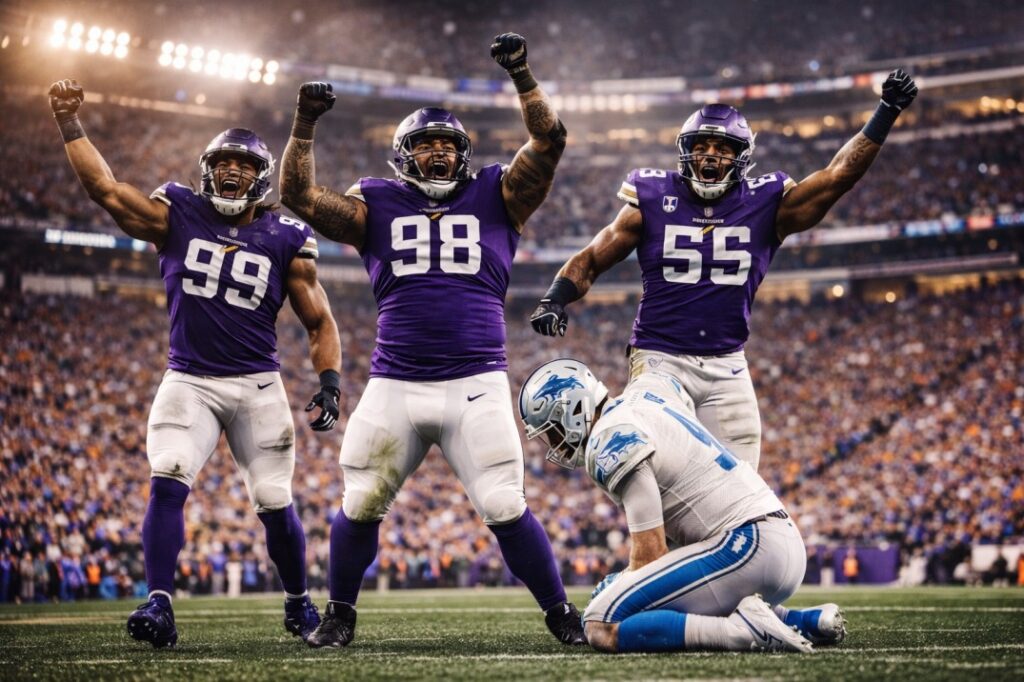
While defense stole the spotlight, special teams quietly swung momentum.
Long, accurate field goals and reliable punts flipped field position repeatedly. In a low-scoring environment, every yard mattered — and Minnesota consistently won that hidden battle.
Detroit’s Offensive Collapse
Passing Game Breakdown
Detroit’s passing offense never found its footing. Protection issues, miscommunication, and questionable decision-making turned promising drives into empty possessions.
Missed reads and sacks pushed the Lions behind schedule, forcing predictable play-calling that Minnesota easily neutralized.
Lack of Adjustments
Perhaps most concerning for Detroit was the absence of meaningful halftime adjustments. Minnesota continued to dictate terms, while Detroit struggled to counter the defensive pressure.
Table: Lions’ Offensive Struggles Explained
| Issue | Result |
| Poor Pocket Protection | Increased sacks |
| Limited Receiver Separation | Fewer completions |
| Forced Throws | Turnovers |
| Ineffective Play Calling | Stalled drives |
| Mental Errors | Lost momentum |
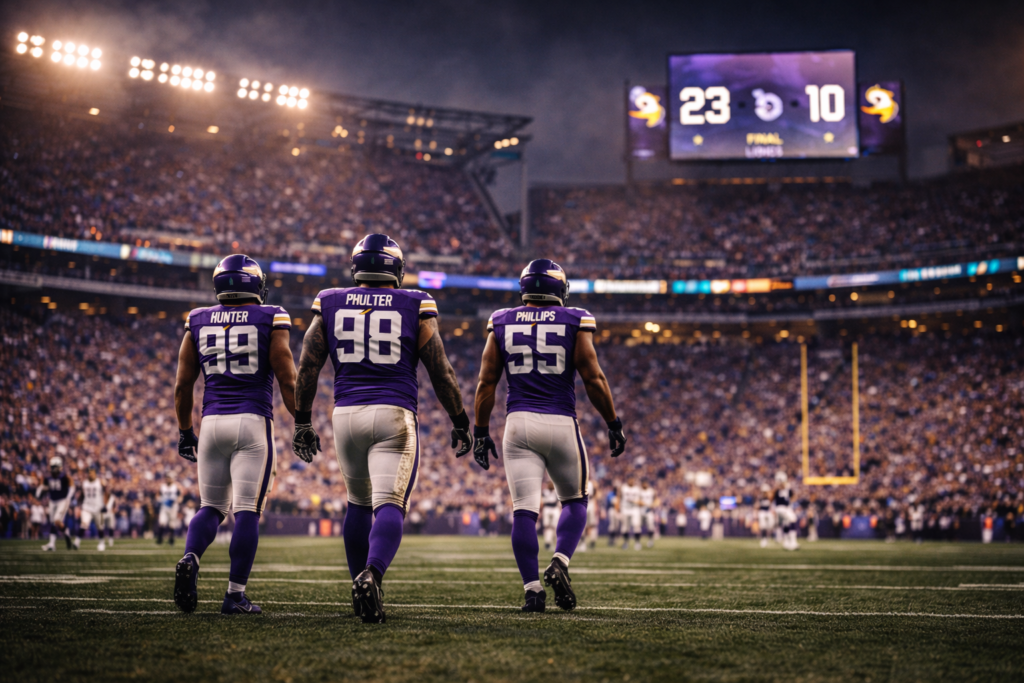
A Rare Win That Will Be Studied
Wins like this are coaching clinics in disguise.
Minnesota showed how to:
- Protect a limited offense
- Build a defense-first identity
- Control tempo without scoring frequently
For teams dealing with quarterback injuries or inconsistency, this game will be replayed in film rooms across the league.
Read Also:Arsenal Beat Crystal Palace on Penalties to Reach Carabao Cup Semi-Finals
What This Win Means for the Vikings
This victory strengthens Minnesota’s reputation as a playoff-capable team built on adaptability. They proved they can win ugly — a trait that separates contenders from pretenders.
Key takeaways:
- Defense travels well in January
- Discipline beats desperation
- Flexibility wins tough games
What the Loss Means for the Lions
For Detroit, the loss was more than a setback — it was a warning sign.
If the Lions hope to contend consistently, they must:
- Improve pass protection
- Simplify offensive reads
- Respond better to defensive pressure
Talent alone is not enough at this stage of the season.
Final Thoughts
The Vikings’ win over the Lions was not flashy — and that’s exactly why it mattered.
In a league obsessed with highlight throws and gaudy stat lines, Minnesota delivered a masterclass in situational football. They trusted their defense, minimized mistakes, and capitalized when opportunities appeared.
It was a reminder that football is still won in the trenches, in preparation, and in discipline — not just on the stat sheet.
Reference
For original reporting and additional game context, readers can visit:
👉 https://www.espn.com/nfl
2 thoughts on “Defense Over Everything: How the Vikings Beat the Lions Without a Passing Game”