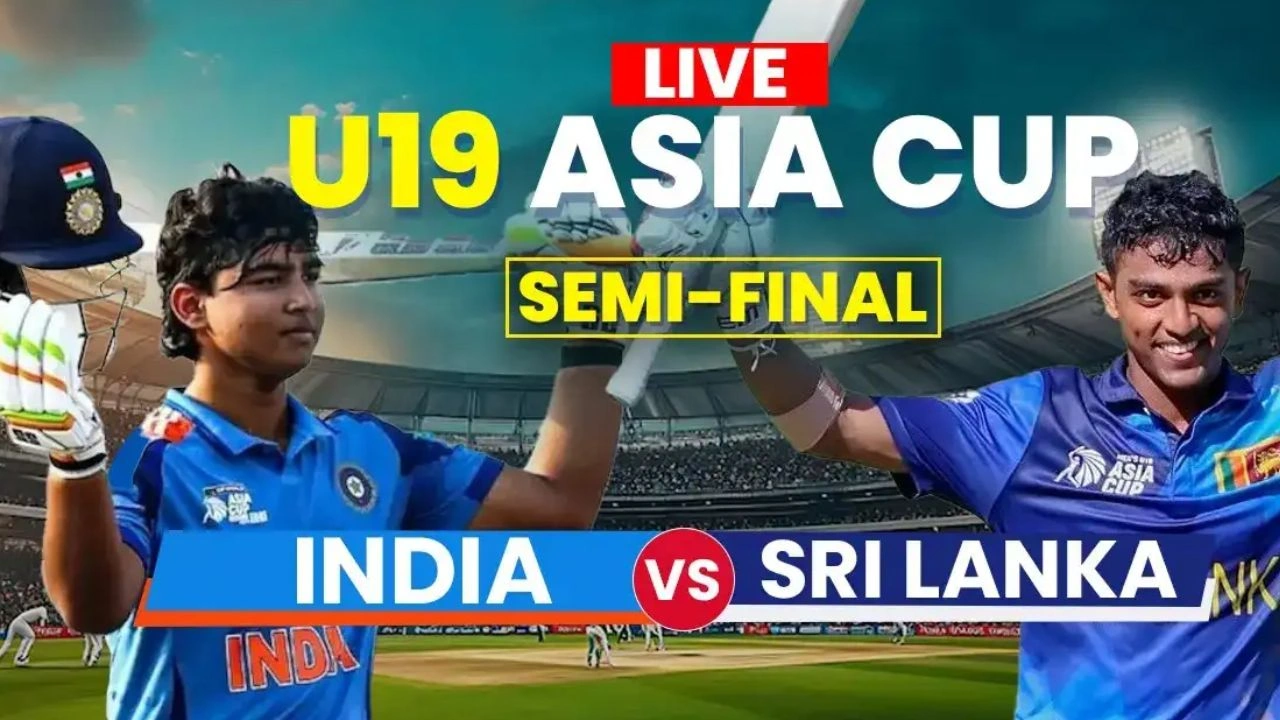
India u-19 vs Sri Lanka u-19: The Under-19 Asia Cup 2025 semi-final between India and Sri Lanka was meant to be a showcase of young talent, fearless cricket, and high-pressure moments. Instead, it turned into a dramatic day defined by persistent rain, anxious waiting, and crucial tournament implications, as both teams fought not just each other but the weather in Dubai.
With a place in the Asia Cup final on the line, anticipation was sky-high. India entered the semifinal as one of the strongest teams of the tournament, unbeaten and dominant. Sri Lanka, known for producing technically sound and mentally tough cricketers at the junior level, arrived with confidence of their own. Yet, as clouds gathered and rain delayed proceedings, the semifinal evolved into a test of patience and nerves rather than bat and ball.
High Stakes at the ICC Academy Ground, Dubai
The semifinal was scheduled to be played at the ICC Academy Ground in Dubai, a venue that has hosted several high-profile age-group tournaments in recent years. The match was expected to begin early in the morning, allowing enough time for a full contest.
However, from the very start, weather conditions disrupted plans. Overnight rain left the outfield damp, and intermittent showers throughout the morning prevented the toss from taking place on time. Match officials conducted multiple inspections, but conditions remained unsuitable for play.
As hours passed, uncertainty grew among players, coaching staff, and fans watching closely from across the subcontinent.
Read Also: IPL Auction 2026 Full List: Sold & Unsold Players, Top Buys & Team Analysis
India’s Dominant Journey to the Semifinal
India’s Under-19 side arrived at the semifinal with impressive momentum. Their group-stage performances had been nothing short of commanding, sending a clear message to the rest of the tournament.
India topped their group after registering convincing victories against strong and weaker opponents alike. The wins were not only decisive but showcased the team’s depth, balance, and hunger.
Several matches stood out:
- A huge victory against UAE, where India’s batting firepower overwhelmed the opposition.
- A clinical win over Pakistan, traditionally one of the most intense rivalries even at the junior level.
- Another dominant performance that highlighted India’s ability to adapt to conditions and control games from start to finish.
This unbeaten run ensured India entered the semifinal as group toppers, a factor that would later become extremely important due to weather interruptions.
Vaibhav Suryavanshi: The Star of the Tournament
One of the biggest talking points ahead of the semifinal was Vaibhav Suryavanshi, India’s teenage batting sensation. The young opener had already captured attention across the cricketing world with record-breaking performances earlier in the tournament.
His innings against UAE, where he smashed a monumental 171 runs, was hailed as one of the finest knocks in Under-19 Asia Cup history. The innings combined:
- Fearless stroke play
- Exceptional timing
- Mature shot selection well beyond his age
Cricket experts and former players praised Suryavanshi for his calm temperament and ability to dominate bowlers without reckless risk. By the time the semifinal arrived, he had become one of the most closely watched players in the competition.
Fans were eager to see whether he could once again deliver on the big stage.
Sri Lanka’s Road to the Knockouts
Sri Lanka’s Under-19 team may not have enjoyed the same level of dominance as India, but they proved to be competitive and resilient throughout the group stage.
Known for their structured approach and disciplined bowling units, Sri Lanka relied on:
- Consistent top-order contributions
- Smart use of spin
- Strong fielding standards
They secured their semifinal berth by finishing second in their group, navigating tricky matches and showing composure under pressure. Against India, they were expected to test the Indian batting lineup with spin and variations, especially on a Dubai surface known to slow down as matches progress.
The Sri Lankan camp arrived fully aware that one good performance could change the narrative.
Rain Takes Center Stage
Unfortunately for players and fans alike, cricket took a back seat as rain dominated proceedings. From early morning, light showers delayed the toss. Ground staff worked tirelessly to dry the surface, but recurring rain showers kept pushing the start time further.
As per tournament regulations, officials attempted to:
- Reduce the number of overs
- Adjust playing conditions
- Find any possible window to complete a result
Each inspection brought hope, only for clouds to return once again.
With every passing hour, the likelihood of a full match decreased.
What Happens If the Match Is Washed Out?
As delays continued, attention turned to tournament rules. In knockout matches, rain can often lead to tense scenarios where progression depends on group-stage standings rather than on-field performance.
According to the Under-19 Asia Cup playing conditions:
- If the semifinal cannot be completed
- And no result is possible even with reduced overs
- The team that finished higher in the group stage advances to the final
This rule meant that India held a crucial advantage. Having topped their group with an unbeaten record, India stood in line to qualify for the final if the match was abandoned.
Sri Lanka, despite their efforts and preparation, faced the harsh reality that weather might deny them a chance to compete.
Emotional Impact on Young Players
For Under-19 players, opportunities like Asia Cup semifinals are career-defining moments. Many of these youngsters dream of representing their senior national teams one day, and big performances in youth tournaments often serve as stepping stones.
The prolonged delay was emotionally challenging:
- Players remained in kit for hours
- Warm-ups were repeated multiple times
- Focus had to be maintained without knowing when—or if—play would begin
Coaches worked hard to keep morale high, reminding players to stay ready and mentally strong. Still, the disappointment was visible, particularly among Sri Lankan players who knew time was running out.
Broadcast, Fans, and Growing Frustration
Fans across India and Sri Lanka followed updates closely through live blogs, television broadcasts, and streaming platforms. Social media was filled with reactions ranging from hope to frustration.
Broadcasters provided regular weather updates, visuals of the covered pitch, and discussions around possible outcomes. Experts debated:
- Whether a shortened match could still be played
- The fairness of group-position qualification rules
- The impact of weather on tournament integrity
Despite the frustration, many fans expressed sympathy for the young cricketers caught in circumstances beyond their control.
India’s Strength Beyond Individual Stars
While Vaibhav Suryavanshi attracted most of the spotlight, India’s strength lay in their overall team balance. The squad featured:
- Reliable middle-order batters capable of rebuilding or accelerating
- All-rounders who added depth
- A varied bowling attack combining pace and spin
India’s bowlers had consistently applied pressure during the tournament, regularly taking wickets in the middle overs and preventing opposition recoveries. Fielding standards were also high, reflecting strong preparation and discipline.
Even without play, many observers believed India were well-equipped to challenge for the title.
Sri Lanka’s Missed Opportunity
For Sri Lanka, the semifinal represented a chance to upset a tournament favourite. Their bowlers were expected to exploit any early assistance from the surface, while their batters aimed to build partnerships and apply scoreboard pressure.
The washout scenario, however, meant:
- No opportunity to test India under pressure
- No chance for individual brilliance to influence the result
- A painful end to a hard-fought campaign
While rules are rules, the emotional weight of elimination without playing a ball is difficult to accept—especially at the youth level.
The Bigger Picture: Preparing Future Stars
Despite the disappointment, the Under-19 Asia Cup continues to play a crucial role in developing future international cricketers. Past editions of the tournament have introduced players who later became household names in senior cricket.
For India, consistent success at the junior level reflects:
- A strong grassroots system
- Effective talent identification
- Professional coaching structures
Sri Lanka, too, continues to produce technically sound players, even if results have been mixed in recent years.
Read Also: Fog Delays, Injury Woes, and a Series at Stake: India vs South Africa 4th T20I in Lucknow
Looking Ahead to the Final
As the semifinal drifted closer to abandonment, attention shifted to the final of the Under-19 Asia Cup 2025. India, whether through play or by virtue of standings, appeared poised to secure their place.
The final promised:
- High-quality cricket
- A chance for young stars to shine
- Another step in the journey toward international careers
For Indian players, the challenge would be to reset mentally, avoid complacency, and approach the final with the same intensity shown throughout the tournament.
Conclusion
The India vs Sri Lanka Under-19 Asia Cup 2025 semifinal will be remembered less for cricketing action and more for the relentless rain that reshaped its outcome. While fans were denied an exciting contest, the day highlighted the unpredictable nature of the sport and the importance of tournament structure.
India’s dominant group-stage performance ultimately worked in their favour, underlining why consistency across matches matters just as much as knockout brilliance.
For Sri Lanka, the tournament ends with pride, lessons, and the hope that future opportunities will bring better fortune.
As youth cricket continues to evolve, matches like this—played or not—remain vital chapters in the stories of tomorrow’s stars.
Disclaimer
This content is provided for informational and entertainment purposes only. Sports opinions, analysis, and outcomes may change over time. Images used are for representational purposes only, and all rights belong to their respective owners. PeakatPlay.com is not responsible for any decisions or actions taken based on this content.
4 thoughts on “India vs Sri Lanka U19 Asia Cup 2025 Semi-final: Rain Delay, Qualification Twist”