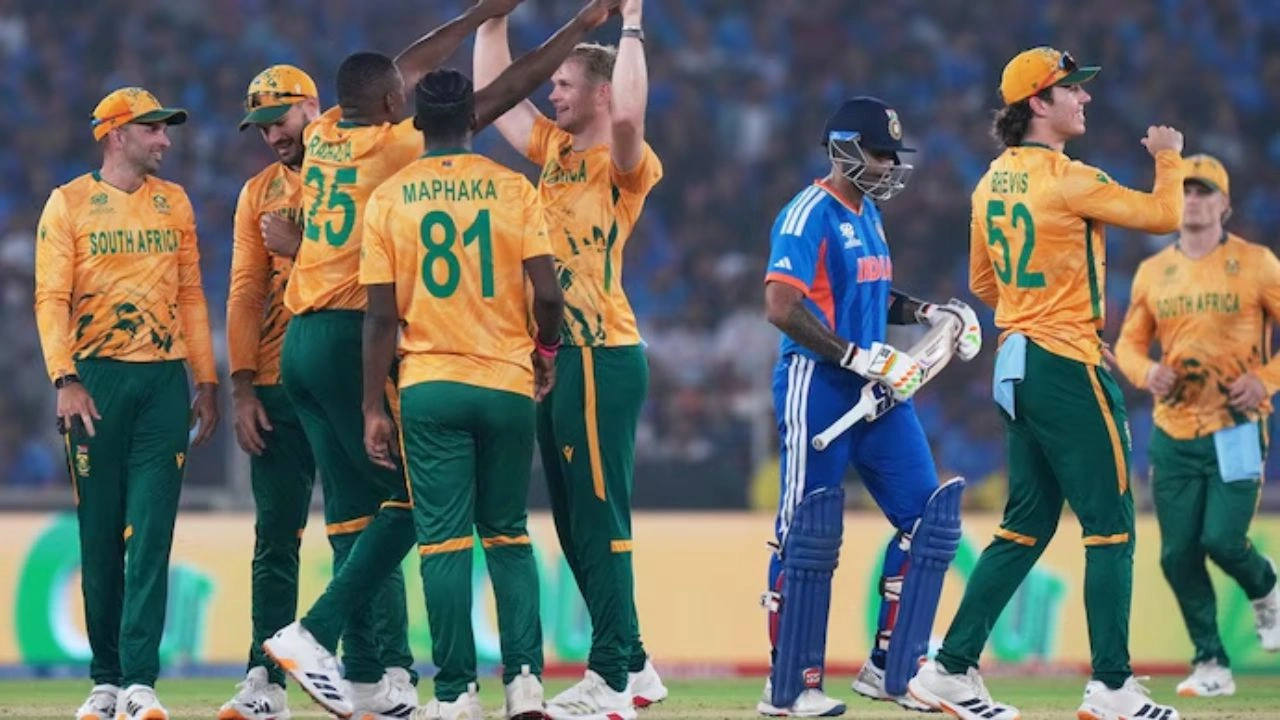
south africa vs india: India’s heavy defeat to South Africa in the ICC Men’s T20 World Cup has sparked one of the most intense cricket debates of the tournament so far. The loss was not just about runs on the board or wickets lost; it triggered deeper concerns about mindset, strategy, and adaptability.
Former India captain Sunil Gavaskar delivered a frank and thought-provoking analysis of the defeat, arguing that the team appeared overconfident and failed to adjust to match conditions. His comments have since ignited discussion across fans, analysts, and former players alike.
More than criticism, Gavaskar’s remarks represent a call for recalibration — a reminder that even elite teams must remain flexible, disciplined, and grounded in high-pressure tournaments.
A Shock Result That Changed the Conversation
India entered the Super Eight stage with strong momentum and a long unbeaten run in T20 World Cup matches. Expectations were high. The team had shown attacking intent, confident leadership, and a powerful batting lineup capable of chasing daunting targets.
However, against South Africa, that confidence did not translate into composure.
South Africa posted a competitive total of 187 for 7 after recovering from early setbacks. Their innings demonstrated patience, tactical awareness, and an understanding of how the pitch was behaving. Instead of forcing boundaries early, their batters built partnerships and accelerated at the right time.
India’s chase, in contrast, faltered almost immediately. Early wickets in the powerplay created scoreboard pressure. The top order struggled to find rhythm. Aggressive shots were attempted without adequate assessment of conditions.
Ultimately, India were bowled out for 111 in 18.5 overs, suffering a 76-run defeat — one of their most significant losses in recent T20 World Cup history.
The margin of defeat made it clear: this was not a narrow contest decided by small moments. It was a comprehensive outplay.
Read Also: T20 World Cup 2026: How Pakistan Can Qualify for Semi-Final After NZ Washout
Gavaskar’s Core Message: Adaptation Over Ego
Sunil Gavaskar’s post-match commentary focused on one central theme — adaptability.
According to him, India seemed to approach the chase with excessive aggression and insufficient evaluation of the pitch. He suggested that the batters did not appear to learn from how South Africa constructed their innings.
In modern T20 cricket, aggressive batting is often celebrated. However, Gavaskar emphasized that aggression must be intelligent. Every pitch behaves differently. Every opponent executes distinct strategies. Success lies in observing and responding to those variables.
His most striking point was that teams must “get rid of ego” and play according to conditions.
Confidence is essential in elite sport, but overconfidence can lead to rigid decision-making. Gavaskar’s criticism highlighted that India may have relied too heavily on attacking instinct rather than situational awareness.
Understanding the Conditions
The surface in Ahmedabad was not entirely batting-friendly. There was movement early on, and the bounce was not always predictable.
South Africa’s batters recognized this. They avoided unnecessary risks in the first few overs, respected quality deliveries, and gradually built momentum.
India’s approach, however, appeared different. Rather than consolidating during the powerplay, the batters looked for quick boundaries. This resulted in early dismissals that disrupted the chase before it properly began.
In T20 cricket, the powerplay is important, but losing multiple wickets in that phase can make recovery extremely difficult. A measured start could have laid the foundation for acceleration later.
This was the essence of Gavaskar’s argument: assess first, attack later.
The Psychological Dimension
World Cup tournaments amplify mental pressure. Teams carry expectations from fans, media, and history. For India, as defending champions, that pressure is even greater.
When a team strings together multiple wins, confidence naturally grows. However, maintaining humility amid success is a challenge.
Gavaskar’s comments suggest that India may have entered the match assuming their aggressive style would overpower the opposition regardless of conditions. That belief, if unchecked, can affect shot selection and game awareness.
In high-level cricket, mental discipline is often the difference between dominance and disappointment.
Individual Performances and Accountability
While Gavaskar’s remarks focused on the collective approach, individual performances inevitably came under scrutiny.
Early dismissals from the top order placed enormous strain on the middle order. Chasing 188 requires stability at the start. Instead, India were forced into rebuilding mode almost immediately.
When wickets fall in clusters, batters further down the order must balance caution and urgency. That is one of the most difficult situations in T20 cricket.
This match exposed vulnerabilities in handling scoreboard pressure.
However, criticism must be contextual. Even the best teams experience off days. What matters is how they respond.
Strategic Flexibility in Modern T20 Cricket
The evolution of T20 cricket has emphasized adaptability. Teams now analyze conditions in real time. Batting orders are shuffled depending on match situations. Bowlers are rotated strategically based on matchups.
Successful teams often adjust their plans within the first few overs.
India’s approach against South Africa appeared more predetermined than reactive. Once early wickets fell, there was limited visible adjustment.
Gavaskar’s comments underline a crucial truth: in T20 cricket, flexibility is not optional — it is essential.
The Role of Leadership
Captains and senior players play a vital role in shaping on-field strategy.
When early setbacks occur, leadership must calm nerves and recalibrate plans. Instead of chasing an unrealistic powerplay score, teams can aim for consolidation.
The ability to slow the tempo when needed is as important as accelerating when opportunities arise.
India’s leadership group will likely review this match closely to identify decision-making improvements.
Suggested Changes to the Lineup
Gavaskar also hinted at potential team adjustments. He suggested that Axar Patel could provide better balance in certain conditions, while Washington Sundar’s role might need reconsideration.
Team combinations are a critical element of tournament success. Selecting players based on pitch behavior and opposition strengths can make a significant difference.
However, team management must balance stability with experimentation. Frequent changes can disrupt rhythm, but strategic tweaks can enhance performance.
The Broader Implications for India’s Campaign
This defeat may ultimately prove beneficial if it prompts meaningful adjustments.
Sometimes, a setback exposes weaknesses that would otherwise remain hidden until knockout stages. Identifying those weaknesses early allows corrective action.
India still possess a strong squad with depth in both batting and bowling. One loss does not erase their credentials as title contenders.
The real test lies in response.
Lessons From South Africa’s Approach
South Africa demonstrated a disciplined brand of T20 cricket in this match.
Their batters respected the conditions, built partnerships, and accelerated at calculated moments. Their bowlers executed plans consistently and maintained pressure after early breakthroughs.
The difference between the two teams was not raw talent — it was tactical execution.
India can draw valuable lessons from this performance.
Balancing Aggression With Intelligence
Modern cricket rewards attacking intent, but the best teams combine aggression with awareness.
Blind aggression can be counterproductive, especially on challenging surfaces.
A successful chase of 188 typically involves phases:
- Assessing early movement
- Building partnerships
- Targeting specific bowlers
- Accelerating in the final overs
Skipping the assessment phase can lead to early collapse.
This is precisely what Gavaskar emphasized.
Public Criticism and Its Impact
Constructive criticism from respected figures can serve as motivation. Gavaskar’s stature in Indian cricket ensures his voice carries weight.
Players and management are unlikely to dismiss his analysis lightly.
However, criticism must translate into action. Tactical meetings, honest internal discussions, and refined strategies are essential in the aftermath of such defeats.
The Path Forward
India’s next matches will reveal whether lessons have been absorbed.
Key focus areas may include:
- Measured powerplay strategy
- Clear contingency plans if early wickets fall
- Flexible batting order decisions
- Improved communication between batters
- Tactical bowling rotations
If these adjustments are implemented, the defeat could become a turning point rather than a defining setback.
Read Also: India Women vs Australia T20I Series 2026: Smriti Mandhana Leads Historic 2–1 Triumph in Adelaide
Maintaining Perspective
It is important to maintain perspective. T20 cricket is unpredictable by nature. Even dominant teams experience occasional heavy defeats.
What separates champions from contenders is resilience.
India have demonstrated resilience in past tournaments. The coming fixtures will test that quality once again.
Conclusion: A Defining Moment
Sunil Gavaskar’s critique has brought clarity to the conversation surrounding India’s defeat. His emphasis on humility, adaptability, and situational awareness resonates deeply in the context of modern T20 cricket.
The loss to South Africa was significant, but it is not irreversible. It serves as a reminder that talent must be matched by tactical intelligence.
If India respond with renewed discipline and flexibility, this setback may strengthen their campaign.
If not, it could signal deeper structural issues in approach and mindset.
The T20 World Cup is far from over. The opportunity for redemption remains.
India now face a defining choice: cling to rigid confidence, or embrace adaptability and evolve.
How they answer that challenge will determine the trajectory of their tournament — and perhaps shape the future direction of Indian T20 cricket itself.
1 thought on “India’s Wake-Up Call at the T20 World Cup: Why Gavaskar’s Criticism Could Shape the Team’s Future”