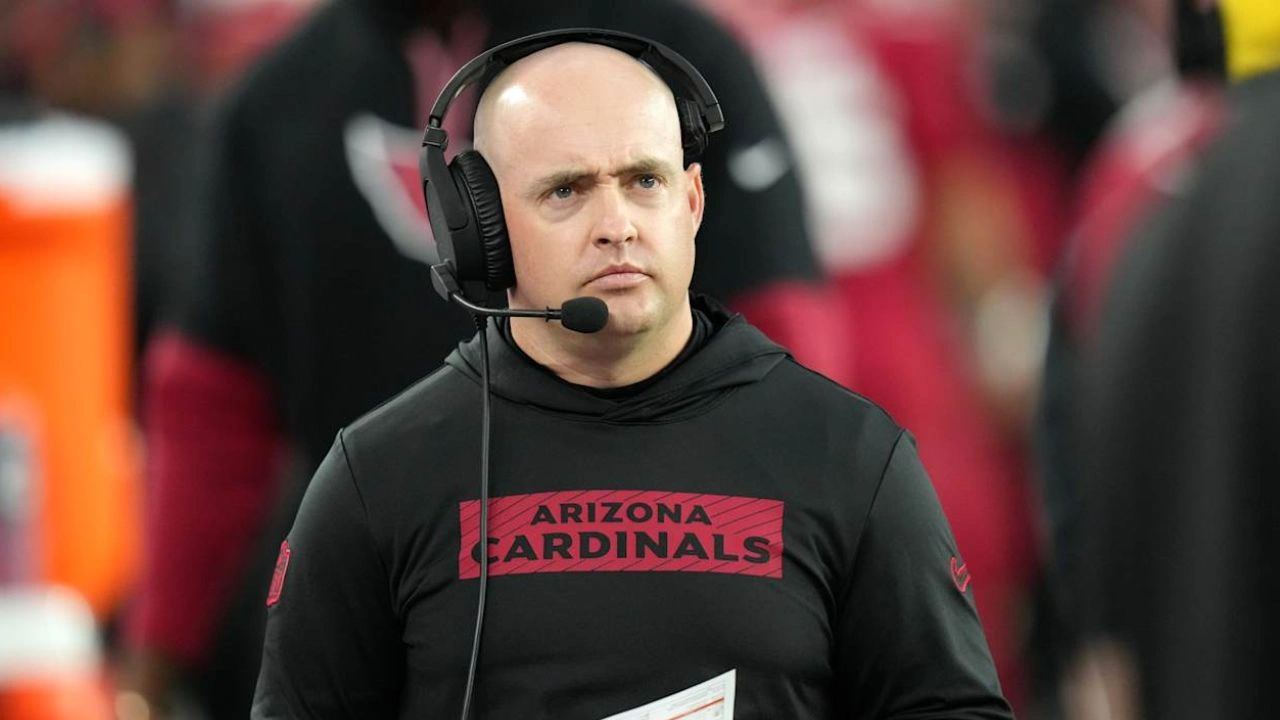
The Detroit Lions have made one of the most consequential coaching decisions of their offseason by hiring Drew Petzing as their new offensive coordinator. For a franchise seeking stability, offensive consistency, and long-term competitiveness, this move signals a deliberate philosophical shift rather than a reactionary hire.
After a turbulent season marked by uneven offensive execution and midseason play-calling changes, the Lions are betting on a younger, modern offensive mind with experience navigating adversity. At just 38 years old, Petzing arrives with a résumé that includes developing quarterbacks, managing inconsistent rosters, and building adaptable offensive systems in challenging circumstances.
This article explores why Detroit chose Drew Petzing, what his offensive philosophy brings to the Lions, how his arrival impacts Jared Goff and Detroit’s elite skill players, and whether this hire can realistically elevate the Lions back into serious playoff contention.
Why the Lions Needed a New Offensive Direction
Detroit’s offense entered last season with optimism and expectations of continuity. Instead, the year unfolded with inconsistency, stagnation, and frustration.
The Lions finished with a respectable record but missed the playoffs. More concerning than the standings, however, was the offense’s lack of identity. Drives stalled, red-zone efficiency plummeted, and explosive plays became rare. Head coach Dan Campbell ultimately took over play-calling duties midway through the season — a move that reflected urgency but also underscored deeper structural issues.
Former offensive coordinator John Morton was dismissed after just one season, leaving Detroit with a critical decision: double down on internal continuity or bring in an external architect to redefine the system.
Detroit chose reinvention.
Read Also: Titans Set to Hire Robert Saleh as Head Coach: What the Move Means for Tennessee’s Rebuild
Who Is Drew Petzing?
A Coach Built Through Experience
Drew Petzing’s journey to Detroit is not the typical fast-track rise. Instead, his career reflects incremental growth, adaptability, and steady accumulation of experience across multiple NFL organizations.
Before becoming an offensive coordinator, Petzing served in various roles, including:
- Quarterbacks coach
- Tight ends coach
- Offensive assistant
He worked under respected offensive minds and developed a reputation for detailed preparation, quarterback development, and game-specific planning.
Arizona Cardinals Offensive Coordinator (2023–2025)
Petzing’s most recent role came as the offensive coordinator for the Arizona Cardinals. His tenure there was far from easy.
Arizona faced:
- Quarterback injuries
- Inconsistent offensive line play
- Limited roster depth
- Transitional rebuilding phases
Despite these challenges, Petzing’s offenses showed structural coherence, creative sequencing, and a commitment to situational adaptability.
While the Cardinals never became an elite offensive unit, league observers credited Petzing for maximizing limited personnel and keeping Arizona competitive under difficult circumstances.
Why Detroit Chose Petzing
Youth Meets Experience
At 38, Petzing represents a generational shift in coaching philosophy. He blends analytical thinking with traditional football fundamentals, making him an appealing fit for Detroit’s evolving roster.
Detroit’s front office reportedly valued:
- His quarterback development track record
- His adaptability to personnel limitations
- His emphasis on structured yet flexible play design
- His collaborative approach to coaching
A Philosophical Match with Dan Campbell
Perhaps most importantly, Petzing’s coaching personality aligns with Dan Campbell’s leadership style.
Campbell values:
- Accountability
- Preparation
- Physicality
- Emotional intelligence
Petzing’s reputation as a demanding but communicative coach makes him a cultural fit, not just a schematic one.
What Went Wrong with Detroit’s Offense?
Loss of Identity
Detroit’s offense oscillated between conservative play-calling and ill-timed aggression.
There was no consistent philosophy governing:
- Down-and-distance decisions
- Red-zone strategy
- Play sequencing
- Tempo variation
As a result, opposing defenses easily anticipated tendencies.
Jared Goff’s Regression
Jared Goff’s performance declined statistically and rhythmically.
Key issues included:
- Late-game inefficiency
- Poor third-down execution
- Limited vertical threats
- Breakdown in timing routes
Without a cohesive offensive structure, Goff was often forced into low-percentage throws.
Underutilization of Elite Talent
Detroit possesses one of the most exciting young offensive cores in the NFL:
- Amon-Ra St. Brown
- Jahmyr Gibbs
- Sam LaPorta
Yet the offense failed to consistently exploit mismatches or leverage motion and spacing to free these playmakers.
Petzing’s Offensive Philosophy
Structured Creativity
Petzing’s offenses emphasize:
- Pre-snap motion
- Layered route concepts
- Play-action sequencing
- Personnel-driven formations
He avoids static formations and prioritizes defensive confusion.
Quarterback-Centric Design
At the core of Petzing’s system is quarterback empowerment.
His offenses:
- Simplify reads
- Emphasize timing
- Create defined throwing windows
- Reduce negative plays
This philosophy directly benefits a rhythm-based passer like Jared Goff.
Balance Between Run and Pass
Petzing values offensive balance, not in a numerical sense, but strategically.
He uses the run game:
- To manipulate linebackers
- To create play-action mismatches
- To control game tempo
This approach aligns perfectly with Detroit’s dynamic backfield.
How This Impacts Jared Goff
A Second Wind for Goff’s Career
Jared Goff’s career has thrived in structured offensive environments.
Under Petzing, Goff can expect:
- More defined reads
- Greater use of play-action
- Better spacing concepts
- Improved red-zone efficiency
This is a system designed to reduce cognitive overload and maximize decision-making speed.
Protection and Play Sequencing
Petzing’s scheme prioritizes:
- Quick-hitting concepts
- Shot plays off misdirection
- Max-protect deep routes
These elements reduce pressure exposure and increase completion probability.
How This Affects Detroit’s Skill Players
Amon-Ra St. Brown: The Offensive Engine
St. Brown is Detroit’s most reliable weapon.
Petzing’s offense will likely:
- Increase slot motion
- Utilize bunch formations
- Create isolation mismatches
This could elevate St. Brown’s production and efficiency even further.
Jahmyr Gibbs: A Versatile Chess Piece
Gibbs thrives in space.
Expect Petzing to:
- Motion him out of the backfield
- Target him on angle routes
- Use him in screen packages
This versatility could transform Gibbs into a true dual-threat star.
Sam LaPorta: A Matchup Nightmare
Tight ends are central to Petzing’s offensive philosophy.
LaPorta’s usage should increase in:
- Seam routes
- Play-action concepts
- Red-zone isolations
This could propel LaPorta into elite status at his position.
The Broader Impact on Detroit’s Roster
Offensive Line Optimization
Detroit’s offensive line is one of the league’s best.
Petzing’s scheme:
- Leverages zone blocking
- Incorporates pulling guards
- Utilizes protection disguises
This should further enhance Detroit’s trench dominance.
Receiver Development
Petzing has a strong reputation for receiver route development.
Younger wideouts may benefit from:
- Expanded route trees
- Improved spacing discipline
- Better situational usage
Why This Hire Matters Strategically
Stability in a Crucial Window
Detroit’s roster is built to compete now.
This hire reflects:
- A long-term vision
- Commitment to offensive modernization
- A belief in development over reaction
Organizational Alignment
For the first time in years, Detroit’s:
- Front office
- Coaching staff
- Player personnel
appear aligned around a shared offensive philosophy.
Challenges and Risks
Pressure to Deliver Immediately
Detroit’s fanbase and leadership expect results.
If early struggles persist, scrutiny will be intense.
Petzing’s Mixed Results in Arizona
Critics point out that Arizona’s offense under Petzing never ranked among the league’s best.
However, context matters.
He worked with:
- Backup quarterbacks
- Injured stars
- Rebuilding rosters
Detroit offers him his most talented roster yet.
What This Means for Detroit’s 2026 Outlook
A Rejuvenated Offense
Expect improvement in:
- Third-down efficiency
- Red-zone scoring
- Explosive plays
Detroit’s offense should become more consistent and less predictable.
Playoff Relevance
With improved offensive cohesion, Detroit could realistically return to playoff contention.
The talent is already in place.
Read Also: Chiefs Reunite with Eric Bieniemy as Offensive Coordinator: A Strategic Reset for Kansas City
What Fans and Fantasy Managers Should Know
For Lions Fans
This hire signals ambition.
The franchise is no longer content with mediocrity.
For Fantasy Football Players
- Jared Goff’s value rises
- Amon-Ra St. Brown remains elite
- Jahmyr Gibbs becomes more dangerous
- Sam LaPorta gains upside
Conclusion: A Smart, Calculated Offensive Reset
The Detroit Lions’ decision to hire Drew Petzing as offensive coordinator is a forward-thinking, strategically sound move.
This hire:
- Aligns philosophy
- Maximizes roster strengths
- Modernizes the offense
- Stabilizes leadership
Detroit is not rebuilding.
They are recalibrating.
And if Petzing delivers on his vision, the Lions could emerge as one of the NFL’s most efficient offenses in the coming seasons.
1 thought on “Lions Hire Drew Petzing as Offensive Coordinator: A Strategic Reset for Detroit’s Offensive Future”